













Exercise matters. Running, walking, lifting weights, and simply moving more can improve your fitness, strengthen your body, and burn calories. But exercise can’t completely compensate for poor eating habits.
You can’t outrun a bad diet.
A hard workout might last 30–60 minutes, but the choices you make during the other 23 hours of the day can have an even greater impact on your weight, body composition, energy, and overall health.
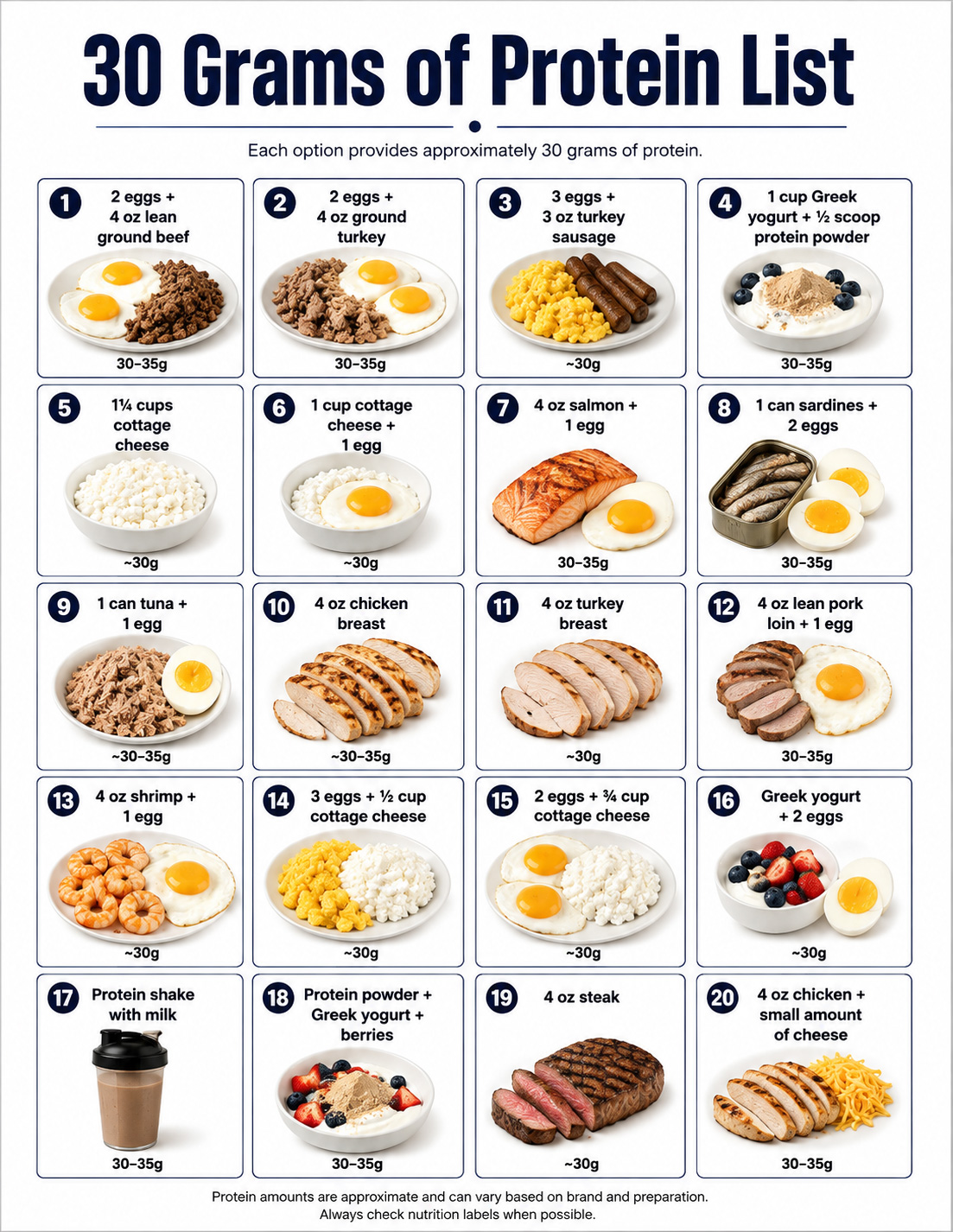
Start With One Simple Goal: Protein
Instead of trying to completely change your diet overnight, start with something manageable:
Work toward approximately 30 grams of protein at each main meal.
Protein helps you feel fuller longer and helps maintain and build muscle. This becomes particularly important when you’re exercising and trying to lose body fat. The goal isn’t simply to lose weight—you want to lose excess fat while maintaining as much muscle as possible.

Why 30 Grams?
Thirty grams isn’t a magic number. It’s simply an easy target that can help you build meals around protein rather than making protein an afterthought.
A meal might be:
- 2 eggs + lean ground meat
- Greek yogurt + protein powder
- Cottage cheese + eggs
- Chicken breast
- Salmon + an egg
- Tuna + an egg
- Steak
- A protein shake
The original video’s approach is similar: build a meal containing roughly 30 grams of protein to improve fullness and support muscle.
Should You Do This Every Day?
Yes—consistency is the point.
You don’t need to eat the same foods every day, and you don’t need to hit exactly 30 grams at every meal. Work toward making adequate protein a normal part of how you eat.
A simple day might look like:
Breakfast: ~30g protein
Lunch: ~30–40g protein
Dinner: ~30–40g protein
Then adjust your total intake according to your individual needs.
And if you don’t normally eat breakfast, you don’t have to start. The video specifically recommends preparing your protein meal for whenever you normally have your first meal rather than forcing yourself to eat first thing in the morning.
Exercise Is Still Important
“You can’t outrun a bad diet” doesn’t mean running or exercise isn’t valuable.
It’s the opposite.
Exercise and nutrition work together.
Exercise helps improve fitness, cardiovascular health, strength, endurance, and calorie expenditure. Protein and good nutrition give your body what it needs to recover, maintain muscle, and support those workouts.
Don’t think:
“I exercised today, so I can eat whatever I want.”
Think:
“I worked hard today. Now I’m going to give my body the nutrition it needs to benefit from that work.”

Don’t Try to Be Perfect
You don’t need a perfect diet.
You need a diet that’s better than the one you have today and realistic enough to continue tomorrow.
Start small.
- Exercise consistently.
- Build meals around protein.
- Reduce unnecessary sugar and highly processed foods.
- Drink more water.
- Make better choices most of the time.
Then keep doing it.
Because you can run hundreds of miles—but you still can’t outrun a bad diet.
Training plan and Visceral Fat Focus
I’m doing exactly this as part of my six-week training challenge for the Blue Ribbon Run. I’m putting in the running miles and speed work, but I also realize that training is only part of the equation. Improving my nutrition and losing some excess weight before race day could make running faster a little easier.
My goal is very specific: I want to run this year’s Blue Ribbon Run at the same pace I ran the race in 2020. I was younger then, but interestingly, I wasn’t nearly as focused on nutrition as I am now.
This time, I’m approaching the challenge from both sides. I’m training my legs and cardiovascular system through running, while also paying more attention to what I eat—especially getting enough protein, making better food choices, and working toward reducing excess body fat.
I’m not expecting perfection, and I’m not looking for a shortcut. The goal is six weeks of consistent, better choices. Run consistently. Eat better. Recover properly. Lose some unnecessary weight. Then see how close I can get to that 2020 version of myself when I step up to the starting line.
The clock will tell me if it worked.